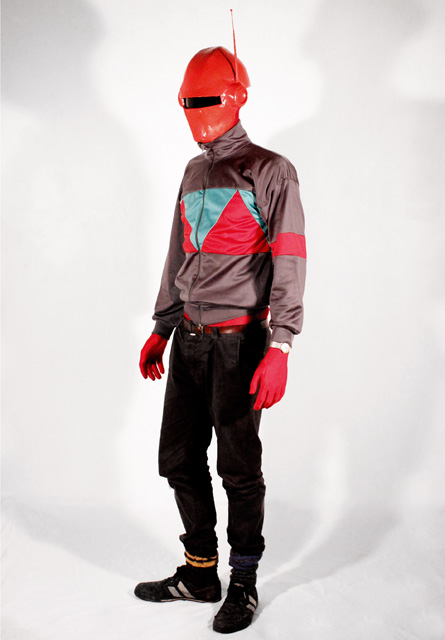
Vis Com 12 is the website of this years graduating 4th year students. And representing as it does, a fantastically diverse body of works, has the most tags of any post on the vis-com blog ever.
Communication Design Department Blog / Glasgow School of Art
Vis Com 12 is the website of this years graduating 4th year students. And representing as it does, a fantastically diverse body of works, has the most tags of any post on the vis-com blog ever.
In this RSA Animate talk, Manuel Lima, author of ‘Visual Complexity‘, talks about a shift, over the last century, from trees to networks as a way of understanding the world. This is significant if we’re starting to talk about ourselves as a ‘distributed academy’ (for which we could read, or at least reflect on, the ‘distributed network’).
Sat 9th June 7pm: Auto Italia South East presents Auto Italia LIVE: Double Dip Concession, an artist-run Live TV show performed before a studio audience and broadcast over the internet.
via Institute of Contemporary Arts : Live : Auto Italia LIVE.
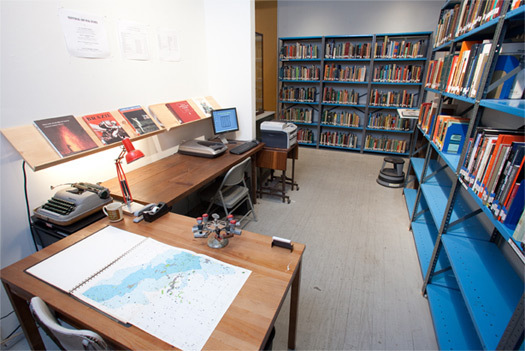
Little Libraries and Tactical Urbanism on Design Observer is a really interesting article mulling over the recent past of small independent ‘library’ initiatives, the library as institution, and the varying roles these play in ‘information culture’.
“Libraries are about much more, of course; they exist not simply to store and provide access to information. Advocates argue that libraries continue to serve crucial civic and social functions, and their tenacious faith is reinforced by a flurry of recent street-level library activity. The last few years have seen the emergence of myriad mini, pop-up, guerilla and ad-hoc libraries, which are part of the phenomenon that Mimi Zeiger, in her Interventionist’s Toolkit series for this journal, calls “provisional, opportunistic, ubiquitous, and odd tactics in guerilla and DIY practice and urbanism” — to which I might add, librarianship.”
Image: Reanimation Library, Brooklyn.
In There Is Business Like Show Business* on Radio 4, Will Young (yes, I know, bear with me) examines the intriguing world of Industrial Musicals — lavish and complex musical theatre devised in the post-war years by corporations to play as informative, entertaining and supposedly morale-boosting features within trade-conventions — mainly to private audiences comprising of corporation staff. It cites examples such as ‘Tractor Man’ — a whole musical devised around the benefits of productivity enhancing Ford Tractors — as examples of a time when corporate budgets (and optimism in the power of consumerism) were at an all-time high, and provides an interesting insight into a very different way of thinking about brands, design and marketing — one which manages to be simultaneously sinister, nieve, and endearing, in a nostalgic kind of way.
I was interested in this as lately I’ve been reading a bit about Fordism and Post-Fordism — the influence of mechanisation on our way of thinking about the world, and the subsequent paradigm shift to a more ‘flexible’, ‘knowledge’ based economy. If you’re interested in exploring this more, this book is a good starting point (in an art and design context). I’ve also really got into this dictionary of ‘Critical Theory’ lately**, and have found it to be a handy route in to a lot of the phrases, terms and people that crop up in articles, discussions etc, but which I know nothing about. There’s a clear and easy to understand definition of Fordism and Post-Fordism in that.
* Available to listen again till Saturday.
** Realise that for the ‘haters’ out there, it’s going to be difficult to decide whether to ‘disrespect’ me for promoting a Will Young radio-show, or touting a dictionary of Critical Theory.
*** The clip used to illustrate this post is not really from the ‘golden era’ of Industrial Musicals – its from a slightly later period, and therefore lacks the production values (and budget) of some of its predecessors. But it was one of the few clips I could track down online. It was made by Allied Chemicals, and this ‘number’ is ‘The Great American Consumer’, from Seein’ the Light, 1978.

Undercurrents is a collection of current 4th years dissertations, edited and compiled by Christopher MacInnes with layout and cover design by Seb Howell (vis-com-des person). All profits go back into future productions.

Upcoming exhibition at Good Press; Opening 16th February 2012, 6pm.
A solo exhibition of works by Benjamin Rawson.
via DEATH BED (UPCOMING) : GOOD PRESS GALLERY.

The arrow and the frame on Click Opera manages to touch on a whole range of topics relevant to current projects; Banking, currency, wild knowledge, art archive, not to mention an interesting reflection on Google adwords. And not only does it contain some very interesting thoughts in the continued thread of good and useful arguments against ternary or binary thinking, but it is also awash with great hyperlinks.
While on the topic, big thanks to Anja and Chris for their currency workshop earlier in the week. There are some pictures below, and a link to Anja and Chris’s bookmarks on the topic here.


2pm-5pm Saturday 14th January 2012
Kinning Park Complex
43 Cornwall Street
Glasgow
G41 1BA
directions: http://www.kinningparkcomplex.org/directions
FREE – donations to Kinning Park welcome
The Radical Media Forum is a regular meeting for left-aligned politically-engaged media practitioners, activists and researchers. Participants include those working with: film/video and television, online media and Indymedia, radio, books and print publication, community and media events, archives, and media research. It is open to individuals and groups working at any level across voluntary activist and community-based media to those working within mainstream and academic contexts.
The forum provides a space for networking, news exchange, skills sharing, discussion, debate, and building a more consolidated base for critical media in Scotland and the UK. Meetings take place every two months at various venues.
Each forum provides time for meeting and exchanging news, issues, ideas, etc., followed by a dedicated skills and discussion session.
For the January 2012 meeting, film and documentary maker Barbara Orton will facilitate a practical workshop to discuss issues and practices around engaging audiences through mainstream formats and alternatives to these. The debate around mainstream access is an important one in political film-making, whether to work with it, challenge, or reject it, and it is useful to understand how such positions may determine the ways in which work is realised. Participants are invited to bring along film and video projects they are currently working on to review and discuss as part of the session.
Mailing list: http://groups.strickdistro.org/groups/mediaforum
Event Organised by the Strickland Distribution: http://strickdistro.org/

“You are sat in a pitch-black room. Your head is gently buzzed with whisky. Out of the darkness you hear a recording of my voice.”
Some interesting podcasts, via The Serving Library.
Friedrich Kittler has been described by some as the Derrida of the Digital Age – the first philosopher to truly explore and understand our emergent relationship with digital technology. Friedrich Kittlers computer wars is a podcast on the Guardian website which explores this legacy.
Another writer on the ‘digital’ who might be worth looking into is Vilém Flusser, who wrote about networks, but also photography and the ‘technical image’.
Thanks to Gordon Hush for the initial link.
Glasgow 1980, as viewed by Oscar Marzaroli, from 1971. In reference to Nostalgia Now brief.

Radical Media Forum – Glasgow
1pm – 5pm, Saturday 29th October 2011
Kinning Park Complex
43 Cornwall Street
Glasgow
G41 1BA
The meeting is free, but donations to Kinning Park Complex welcomed.
An open meeting for practitioners, groups and individuals involved in
independent/radical/critical/activist/rebellious/oppositional media, to discuss the development of a broader support network, archiving, collaborations, future events, and encourage debate on current directions of ‘media from below’ in the UK.
Organised by: http://www.strickdistro.org/

The Commonwealth Games 2014: Whose Legacy?
Short introductory talk by Dr Libby Porter (Urban Planner and Researcher, Glasgow Uni) and Neil Gray (Writer and Researcher, Glasgow Uni) about the Legacy of Mega-Events, and large-scale urban regeneration plans in the UK and worldwide.
A discussion will follow with a series of live accounts by residents – including carers from the Save the Accord centre, who are campaigning to retain a day care centre for people with learning disabilities, and Margaret Jaconelli, who has recently been evicted from her home. The residents will talk about about the impact the Commonwealth Games development is having upon their lives.
This discussion, focusing on media portrayal and the right of residents to ‘stay put’ in the face of large-scale urban transformation and displacement, will be interspersed with a series of short films that highlight recent experiences on, and nearby, the site of the Commonwealth Games Village
Includes special screening of a short film about Margaret Jaconelli and the forthcoming Commonwealth Games by Glasgow documentary photographer and filmmaker, Chris Leslie. (14 mins) www.chrisleslie.com

Good Press is a new outlet, based in Mono (temporarily, while they find a permanent space), from this Friday the 7th October, starting with the first exhibition, The Family Show.
The Family Show will be exhibiting 30 UK and International artists (two of which; Oliver Pitt and Jess Copsey, are recent GSA graduates) who mostly work with illustration and painting. It’s also a fundraiser for their permanent space, with all the original works being available for £30 for those who may wish to buy them!
In the bookshop there will be a large variation of different independent & self-published books, zines and other printed and handmade things. All Com Des people are invited to attend, more background info here. If you’re interested in selling zines etc, they’ve asked interested parties to get in touch directly, just via that web link, that one, back there.

OASE Journal for Architecture has a new website and better still, editions 1-81 are available as PDF’s to download to your non-brand-specific portable tablet device. OASE is/has been designed by Dutch designer and educator Karel Martens.

From Rob Walker, ‘The Work of Art in the Age of Googled Reproduction‘. Connects (in my mind) with this (or this). (And this).

The Art Project, (powered by Google) is on one level, fantastically done, and on another level, unsettling.


Recent Comments