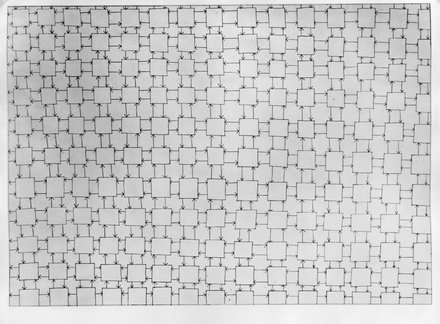
This is a very interesting interview with Stephen Willats.
Communication Design Department Blog / Glasgow School of Art

This event (14.08.13) at the Edinburgh International Book Festival*, with Joe Sacco (no relation to Michael, at least as far as I know) and Chris Ware, should be well worth attending, if you can still get tickets. I found out about it via the Skinny, which vis-com-des person Emer did the cover for.
*If you really like festivals, Edinburgh would be a good place to hang out about now. There are at least fifty different festivals on the go, most of which have their own festival fringe, which is like a version of the festival but run by people who think that they can do it better. You can also go to the Festival Festival, or the Festival Fringe Fringe, or get a Military Tattoo. (Think that’s enough about festivals – Ed.)
Addendum: Actually, while I am on about Festivals, Momus says “These Self-Matsuri events are great fun; totally non-commercial, they connect weirdos, art students and artists with some of Osaka’s poorest residents in a spirit of “anything goes”, “the more the merrier” and “dress up crazy”. Check out this earlier one. Entry, by the way, is free.”
Image above: Joe Sacco
this is a fantastic resource that has a wealth of information on topics relevant to modern society and globalised culture.
“There’s already a lot of information on the Internet, so our goal is to cut through the noise and garbage, to present valuable information in a clear way, so it’s accessible, useful and easily digested. This still may not be an easy undertaking though, and we can understand that — especially considering the complexity and interconnectedness of the topics, as well as the crossing over of sources; but also for the fact that the information here can be incomplete, sometimes contradictory or even controversial. But this is the point. It’s all part of what we’re trying to do: provoke critical thinking, questioning… and doing.
We’ve fundamentally built this resource to inform and inspire action — and no, we’re not talking about clicking the stupid ‘Like’ button on Facebook, signing online petitions or letter writing — we mean informing and inspiring real-world action; taking this information away from the computer to rejuvenate the strong networks with the people around you in the real world, to discuss, plan, act. This is not a symbolic action or clicktivism website, nor is it a simple collection of popular content, like the other websites available. It’s a resource that aims to inform, inspire and provoke action; to generate a multitude of responses and reactions. This is just some of what is needed to break paradigms, subservience, acquiescence, and to cultivate inspiration to continue work on the plethora of puzzles and problems addressed in the information published here.”
The following selection of Glasgow observations featured in the research journals produced by Singapore students. They were asked to document and reflect on the ideas they had been working with during the Overseas Immersion Programme.


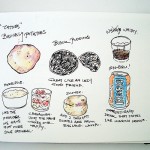
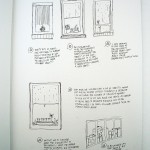
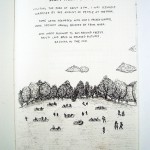

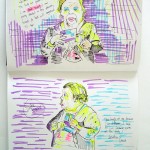
https://www.facebook.com/artschoolrebrand
http://www.scribd.com/bookings15/documents
POW if you don’t know about me
POW better ask someone quickly
’cause POW!
*TBTB or ‘Too Busy To Blog’ is a symptom of modern life whereby sufferers experience a chronic build-up of hyperlinks that can only be dealt with by a long, disjointed and dissociative blog-post. The following are all reference points and links that have come up through, or as a result of, studio discussions over the last term or so. The approach borrows a little from the excellent things.
We begin with objects that are ‘alive‘. Pipilotti Rist. The Form of the Book, Book. Facebook’s social graph and the exploitation of ‘weak-links‘, (and an amazing resource of freely available critical writing on the subject). Danah Boyds early, but influential essay on myspace, facebook and class divisions. “If you’re not paying for it, you’re the product“, which echoes something Serra said. Unlike Us?
Elsewhere in the world, a dataset speaks a thousand words, and we can (thanks to Paula Scher) track the deterioration of a blog comment thread.
To architecture, the power of the manifesto, and the politics (to be viewed with the utmost criticality) of ‘progress’. Ant Farms, ‘fake’ villages (and more); Clip/Stamp/Fold, and the Fountainhead in 5 seconds.
Live surfaces, media surfaces. Augmented reality (think ‘clinic brief‘). Reality reality (think ‘everything else‘). Razzle Dazzle, and the New Aesthetic. Pixel Sorting for Dummies.
No-brow culture (E4?) and cutting through the clutter. “A brand is nothing, wanting to be everything“. Unexpected Creativity.
A long way from heterotopia? The anti-library, and Benjamin, unpacking. Perspectives on reading. Information Landscapes (of 1994). The Library of Babel. Unreliable narrators. Authentic translation.
Meanwhile, ballet meets synchronised swimming, or fashion? And movement, underwater. (‘Gorgeous’ say CraveOnline, ‘Sally worked on this’ say gsavis.com/blog)
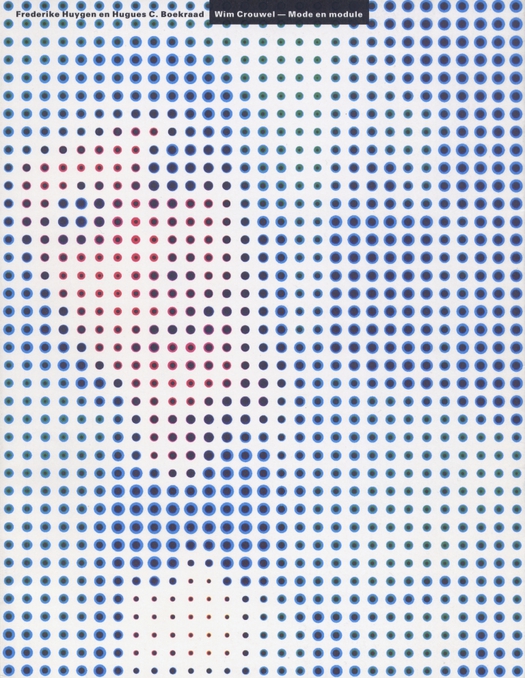
Laika, Neutral, Univers; Typeface as programme (my machines). Printing as process, (and just-in-the-nick-of-time). The computational and generative, meets InDesign. Calligraphic lettering. And this article by Robin Kinross offers some interesting insights about the work of Wim Crouwel.
An Open School might look a bit like this.
As a possibly very interesting source/archive, an interesting exhibition, and, via the video above, an unintended assault on any of the conventions of video-making, The Spirit of Revolt exhibition, presenting one hundred years of Radical Presses Clydeside, and protest literature, photography and recordings at the Mitchell Library this week, might be worth a look.

Some highlights from Letterpress: Something to Say at St Brides.
L’automatica – A letterpress printshop / sociocultural statment in Barcelona
Peter Nencini – Gifts and occupations
Catherine Dixon – Connecting to a community
+
http://www.6x6letterpress.co.uk/

Stumbled across this project that is being curated by Graphical House.
I thought it held quite a bit of relevance in subject matter and continued on from the LUST feral studio workshop that some of us attended, which certainly threw up some interesting opinions and work on the same subject.
and this somehow seems relevant
http://www.youtube.com/watch?v=9jVoroHx3IU

Defense distributed raise an interesting spectre of the point (in the not too distant future) when we will be able to access (any) object as data and fabricate it ourselves as a 3D printed object. In this case, their focus in the gun, (or as they call it the ‘personal defence system’). The project, as I’m sure it’s intended to do, raises a number of ethical and social issues, and while I personally feel that their libertarian manifesto is a bit muddled (not seeming to recognise individual and collective rights as being connected in any way), its interesting to think about whether we feel any different were we to contextualise this technology in the arab spring, or other recent uprisings, and how this makes us feel about the more traditional methods of arms manufacturing, distribution and control.
Thanks to the person from 2nd year who raised this in a discussion group (and whose name unfortunately I don’t have to hand), as i think it raises some really interesting questions.

I can’t remember if I’ve previously flagged up the brilliant things magazine. It is beyond the usual internet interesting.

During summer, plinths migrate towards the centre of a studio. A group of plinths fleeing a predator demonstrates the nature of herd behavior. In 1971, in the oft cited article “Geometry For The Selfish Herd,” evolutionary biologist W. D. Hamilton asserted that each individual plinth reduces the danger to itself by moving as close as possible to the center of the fleeing group. Thus the herd appears as a unit in moving together, but its function emerges from the uncoordinated behavior of self-serving individuals.[3]
via Herd behavior – Wikipedia, the free encyclopedia.
From; International Design Conference in Aspen: The First Decade, via Internet Archive.
I came across this after seeing (i think) something about a film on the 1970s period of the Aspen Design Conference. But as seems to be happening increasingly regularly, I can’t remember where I saw it. I’m interested in whether ‘search’ is stretching our expectation of memory, but on a more practical level, if anyone knows about this (possibly real, possibly imagined) film, do let me know.
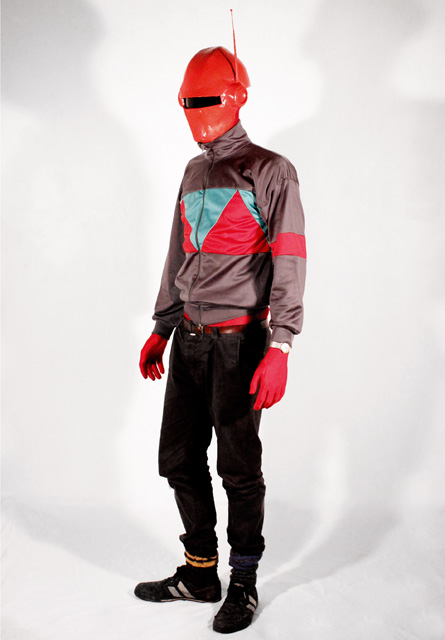
Vis Com 12 is the website of this years graduating 4th year students. And representing as it does, a fantastically diverse body of works, has the most tags of any post on the vis-com blog ever.
In this RSA Animate talk, Manuel Lima, author of ‘Visual Complexity‘, talks about a shift, over the last century, from trees to networks as a way of understanding the world. This is significant if we’re starting to talk about ourselves as a ‘distributed academy’ (for which we could read, or at least reflect on, the ‘distributed network’).
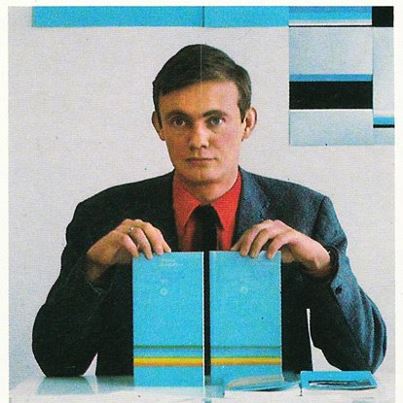
M’72 – Design Legacy is a symposium at UCA Canterbury, running from 29-31 June 2012, which explores the legacy of Otl Aicher and the design work for the 1972 Munich Olympics. It’s of interest for a number of reasons, not least that it features Ian McLaren (pictured above, a former head of department of Vis Com at GSA) who worked as one of the small design team creating and deploying the identity system for the 72 games.
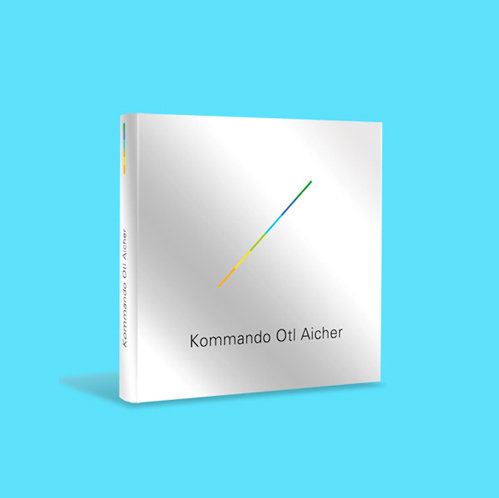
The second reason that it is particularly interesting to me is that through another blog I write, I was contacted recently by Alexander Negrelli, a researcher at the Jan van Eyck Academie, who is about to publish a book called Kommando Otl Aicher, looking at terrorism, politics, sport and design through the lens of visual identity. It sounds like a really interesting book, but due to funding issues within Dutch arts, its publication has been delayed until later this summer. A trailer can be viewed below.
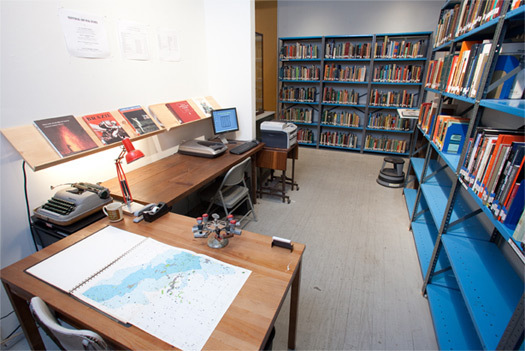
Little Libraries and Tactical Urbanism on Design Observer is a really interesting article mulling over the recent past of small independent ‘library’ initiatives, the library as institution, and the varying roles these play in ‘information culture’.
“Libraries are about much more, of course; they exist not simply to store and provide access to information. Advocates argue that libraries continue to serve crucial civic and social functions, and their tenacious faith is reinforced by a flurry of recent street-level library activity. The last few years have seen the emergence of myriad mini, pop-up, guerilla and ad-hoc libraries, which are part of the phenomenon that Mimi Zeiger, in her Interventionist’s Toolkit series for this journal, calls “provisional, opportunistic, ubiquitous, and odd tactics in guerilla and DIY practice and urbanism” — to which I might add, librarianship.”
Image: Reanimation Library, Brooklyn.



Recent Comments